Choosing an Accessible WordPress Theme for Your Website
When you’re building a website, you have to prioritize accessibility right from the start. It’s not just a “nice-to-have” or an afterthought—it’s a regulatory requirement. An accessible site ensures that everyone, no matter what device they’re using or what their physical abilities are, can actually navigate and interact with your content.
Why Website Accessibility Matters
Designing for accessibility makes the internet better for a lot of different people, including those who:
- Use screen readers because they are blind or have low vision.
- Navigate using only a keyboard instead of a mouse.
- Have visual or physical impairments that make standard browsing difficult.
- Are just browsing on their phones or tablets.
Honestly, when you design with accessibility in mind, you end up with a better site for everyone, not just one specific group. It’s just good design, and a win-win.
When you make a site accessible, you aren’t just following rules—you’re making it easier for everyone to use. A well-organized site helps screen readers and helps Google understand your content, which boosts your search rankings.
You get happier visitors, better traffic, and a site built to last without any legal headaches..
Features to Look For in an Accessible WordPress Theme
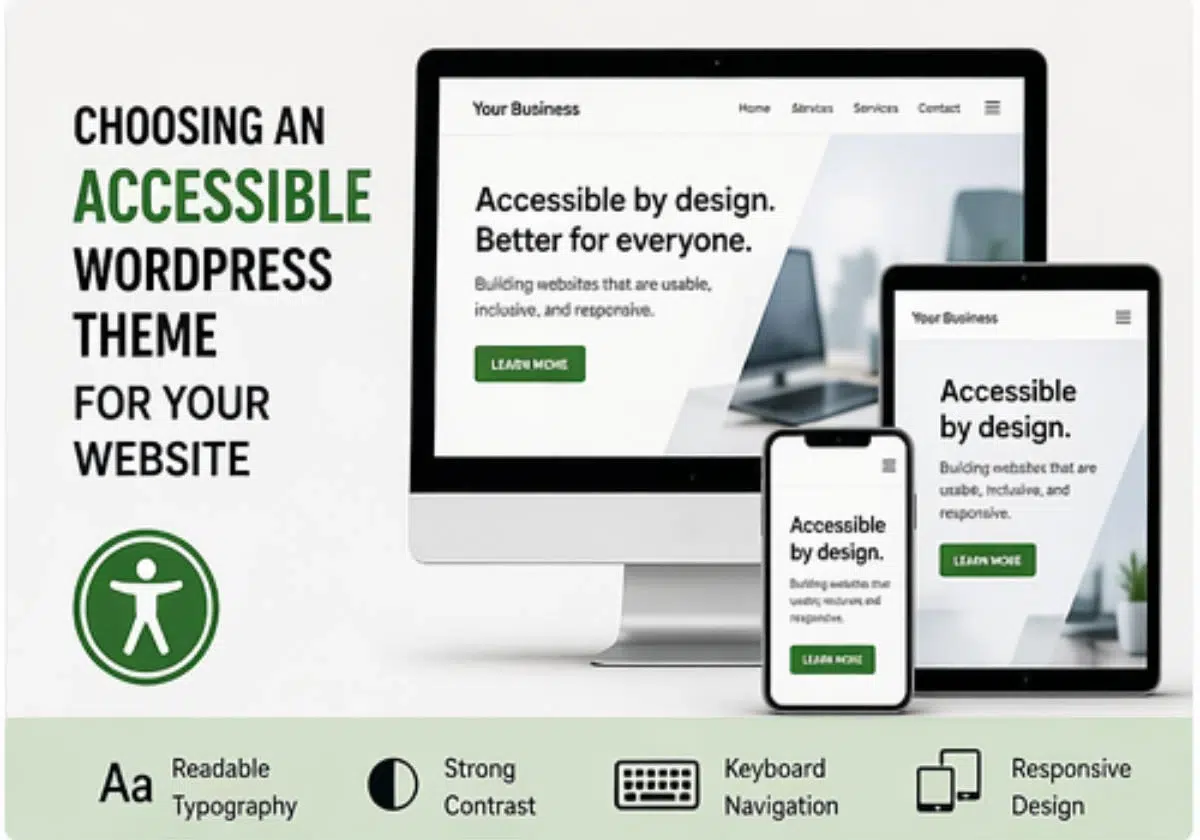
A well-built WordPress theme should support:
- clear heading structures
- readable typography
- strong color contrast
- responsive layouts
- keyboard navigation
These elements create a more inclusive and user-friendly experience.
Start With a Strong Foundation
Choosing a theme built on modern coding standards is the best way to start. It helps you prevent accessibility issues before they even happen, which saves you from dealing with expensive fixes down the road—the kind that can end up costing you thousands of dollars.
The Kadence Theme is one example that offers a clean structure and flexible design tools while supporting accessible website practices.
For businesses serving diverse audiences—locally or beyond—accessibility is not just a feature; it’s part of good web design.