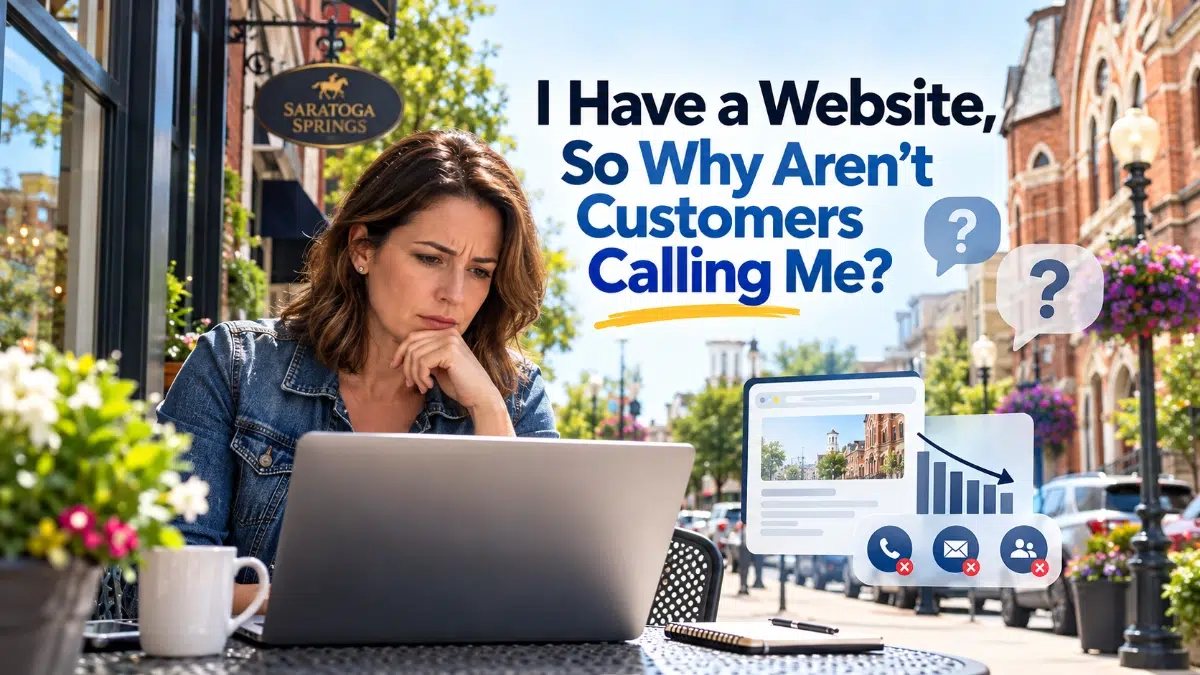
I Have a Website, So Why Aren’t Customers Calling Me?
I Have a Website, So Why Aren’t Customers Calling Me?
You invested in a website, added your business details, listed your services, and made sure people could reach you. Maybe you even posted the link on Facebook.
So, where are the customers?
Your phone stays silent, your inbox remains empty, and when someone asks about your business, you start to wonder if your website is helping at all.
If this sounds familiar, you’re not alone.
Many small business owners have websites that look good but don’t get as many inquiries as they expected. The good news is you probably don’t need to start from scratch or spend a lot on a new site.
Sometimes, just a few key changes can make a big difference.
Let’s explore what could be going on and how you can fix it.
1. Your Website Looks Good, but Is It Clear?
Imagine someone visits your website for the first time. They have a problem and are looking for someone who can help.
Within a few seconds, they should be able to answer three questions:
- What does this business do?
- Is it the right business for me?
- How do I take the next step?
If visitors need to dig through multiple pages to find these answers, they might leave and check out another business.
For example, a headline such as “Welcome to Our Website” doesn’t tell visitors much. However, a headline like “Reliable Home Cleaning Services in Albany, NY” immediately tells them exactly what your business is about and what they can expect.
Your website doesn’t need impressive language. It just needs to show people how you can help solve their problem.
Try this: Have someone unfamiliar with your business visit your homepage. Give them five seconds, then ask what your business does and who it helps. If they can’t answer easily, your message might need improvement.
You can schedule a website review here at: Let’s Start a Project
2. Visitors Don’t Know What to Do Next
Let’s say someone likes what they see on your website. They understand your services and think you might be a good fit.
Then what?
If your website doesn’t clearly show the next step, that potential customer might leave without reaching out.
Every important page should guide visitors toward a useful next step. Depending on your business, that might be:
- Request a quote
- Schedule a consultation
- Call your business
- Book an appointment
- Ask a question
- Make a donation
These actions should be easy to spot, not buried at the end of a long page.
A “Contact Us” button can work well. But sometimes, more specific wording is even better. For example, “Request Your Free Estimate” tells visitors exactly what will happen when they click.
Try this: Open your website and check each main page. Is the next step obvious? Can visitors easily find your phone number or contact form?
3. People May Not Be Finding You on Google
You may offer a great service, have years of experience, and satisfied customers. But if people can’t find you online, you’re missing out.
Think about how your potential customers search.
Someone looking for a plumber in Clifton Park might search for “plumber near me.” A nonprofit looking for a website designer might search for “nonprofit website design services.”
Your website should use the same words your customers use when searching for your services.
This doesn’t mean repeating the same keyword again and again. It means clearly explaining what you do, where you work, and who you help.
For a local business, a few other things matter:
- Your Google Business Profile: Keep your business hours, phone number, services, and website link accurate.
- Your service pages: Give important services their own useful descriptions instead of squeezing everything onto one page.
- Your customer reviews: Encourage satisfied customers to share honest feedback about their experience.
- Your contact information: Make sure your business name, address, and phone number are accurate wherever they appear online.
These steps help search engines understand your business and make it easier for potential customers to decide if you’re the right fit.
Try this: Search Google for your main service and town. For example, if you’re a web designer in Saratoga Springs, search for “web design Saratoga Springs.” See what appears, whether your business is visible, and what other businesses are showing potential customers.
Keep in mind, search results change based on location and other factors. Not showing up at the top doesn’t always mean there’s a problem, but it’s worth checking.
You can schedule a website review here at: Let’s Start a Project
4. Your Website May Be Frustrating People on Their Phones
It’s easy to miss this: your website might look great on your computer but be tough to use on a phone.
A potential customer may be standing in line, sitting on the couch, or taking a short break at work when they find your business.
If your text is tiny, buttons are hard to tap, or the contact form is tricky to fill out, people may just give up.
A slow website causes the same issue. People don’t want to wait to find your phone number or see what you offer.
Your website should make things easy for visitors, no matter what device they use.
Try this: Pick up your phone and visit your website as a new customer.
Can you read the text easily? Does the menu work? Can you find your services, tap your phone number, and fill out your contact form?
Also, check if your pages load quickly. Google’s PageSpeed Insights tool can point out speed issues and suggest fixes.
5. Visitors Don’t Have Enough Reasons to Trust You
Before reaching out, people want to feel sure they’re making the right choice.
Your website plays a big part in building that confidence.
Picture yourself searching for an accountant. You find two websites. One just lists a few services and a phone number. The other explains who the accountant helps, describes the services clearly, answers common questions, and shares real client testimonials.
Which business would you feel more comfortable contacting?
Your website should help visitors see not just what you do, but also why they should choose you.
Here are a few ways to build trust:
- Explain your experience and how you help customers.
- Include genuine testimonials or reviews, with permission where needed.
- Show examples of your work or explain how you approach common problems.
- Provide clear contact information.
- Answer questions customers often ask before buying.
- Keep your content accurate and up to date.
You don’t have to make big promises or say you’re the best. Just be honest about what you offer and show visitors what it’s like to work with you.
People trust you more when they can find the information they need and feel there’s a real person behind the business.
6. Your Website Might Be Working, but You Aren’t Measuring It
Another thing to consider: your website might be getting visitors, but you don’t know what they do after they arrive.
Without basic website data, it’s tough to know if people are finding you, which pages they like, or where they get stuck.
You don’t need to be a data expert to start learning from your website.
Tools such as Google Analytics can help you understand how people use your site. Google Search Console can show which searches bring people to your website and how your pages appear in Google Search.
You can start by looking at a few simple questions:
- How many people visit my website?
- Which pages do they visit most?
- What search terms bring them to my site?
- Are people completing my contact form or taking other important actions?
- Have inquiries increased or decreased over time?
Don’t stress if you don’t have all the answers yet. The goal is to swap guesswork for helpful information.
Also, keep in mind that more website visitors don’t always mean more customers. The real goal is to attract people who need your services and make it easy for them to reach you.
So, What Should You Fix First?
If you feel overwhelmed, don’t try to fix everything at once.
Start with the basics.
You can schedule a website review here at: Let’s Start a Project
First, make your message clear. Visitors should quickly understand what you do, who you help, and why your service might be right for them.
Next, make it easy for people to contact you. Check your phone number, email, contact form, and calls to action.
Then, review how your website works on a phone. Visit it and look for anything that makes it hard to use.
After that, check your visibility. Make sure your website clearly explains your services and your Google Business Profile is accurate if you serve local customers.
Finally, review your data. See if people are visiting your website and if those visits turn into inquiries.
Tackle these steps one at a time. You might find that a small change fixes a problem you didn’t even know was there.
If the issues are bigger, a website review can help you figure out what to focus on first.
Schedule a Free Website Review
Frequently Asked Questions
Your Website Should Work for Your Business
You started your business to help customers, solve problems, or offer something people need. Your website should support that goal.
If your website isn’t bringing in as many inquiries as you hoped, don’t assume you wasted your money or need to start over.
The first step is to figure out what’s holding your website back.
At DJ WebDesigns, I help small businesses and nonprofit organizations build and improve WordPress websites that are easy to use, clearly communicate their services, and support their goals.
If you’re unsure what’s stopping your website from working, take a closer look.
Get a free 60-second Website & Local SEO Audit and take the first step toward understanding where your website may need improvement.
Your website doesn’t need to be perfect. It just needs to help the right people find you, understand what you offer, and feel confident reaching out.
Let’s work on that!