5 Things I Learned While Building a Web Design Business in the Capital District
Note: Some links in this post may be affiliate links, which means I may earn a small commission at no extra cost to you.
When I first started DJ WebDesigns here in the Capital District, I thought web design was mostly about making things look cool.
I was wrong.
A professional website is less like a digital painting and more like a high-performance engine. If it’s not built right under the hood, it won’t bring in leads—no matter how nice it looks.
If you’re a business owner in Albany, Saratoga, or nearby and thinking about your website, here are some key questions I had to figure out the hard way.
1. What does a web design business actually do?
Most people think web designers just pick colors and fonts.
In reality, we do a lot more.
A good web design business:
- Makes sure your website loads fast (this affects Google rankings)
- Builds your site so it works for everyone (accessibility)
- Structures your content so search engines can find you (SEO)
- Guides visitors toward taking action (calls, forms, bookings)
Think of it this way: we build the bridge between your business and your customers.
2. Do I need an LLC for a web design business?
Short answer: No, but it’s a smart move.
You can start as a sole proprietor. But forming an LLC (Limited Liability Company) gives you protection.
If something goes wrong—like a contract issue—your personal assets (like your home or car) are usually protected.
It also helps you look more professional when working with clients.
3. What are the 7 C’s of a website?
I use this as a checklist for every site I build to make sure it actually works.
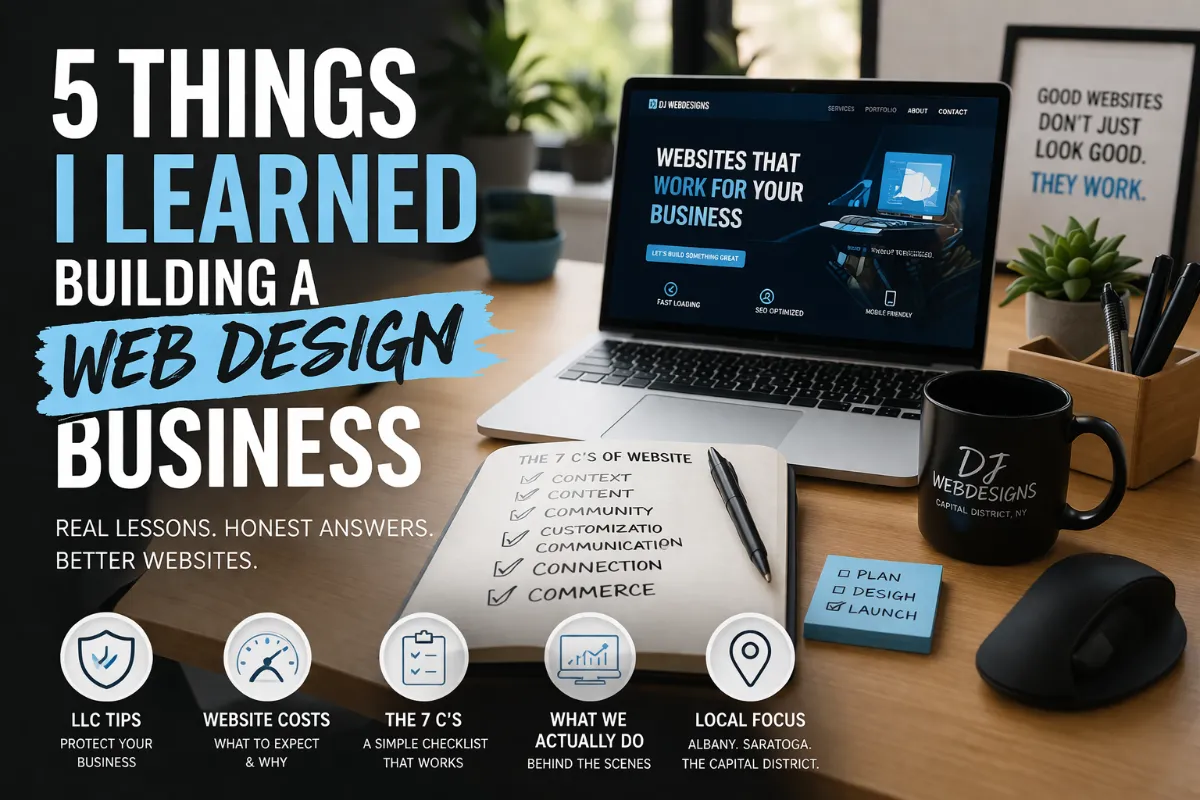
Here are the 7 C’s in simple terms:
- Context – Is it clear where the user is?
- Content – Is the information helpful?
- Community – Can users connect or engage?
- Customization – Does it fit your audience?
- Communication – Is the message clear?
- Connection – Are there useful links?
- Commerce – Is there a clear next step (call, buy, book)?
If a website is missing even a few of these, it usually underperforms.
4. How much does a website designer cost?
This depends on what you need.
Here’s a simple breakdown:
- Basic website: $600–$3,000
- Small business site with strategy: $3,000–$7,000+
- Advanced or custom builds: Higher depending on features
But here’s what I’ve learned:
You’re not just paying for design. You’re paying for:
- Speed and performance
- SEO structure
- A strategy that helps your site grow
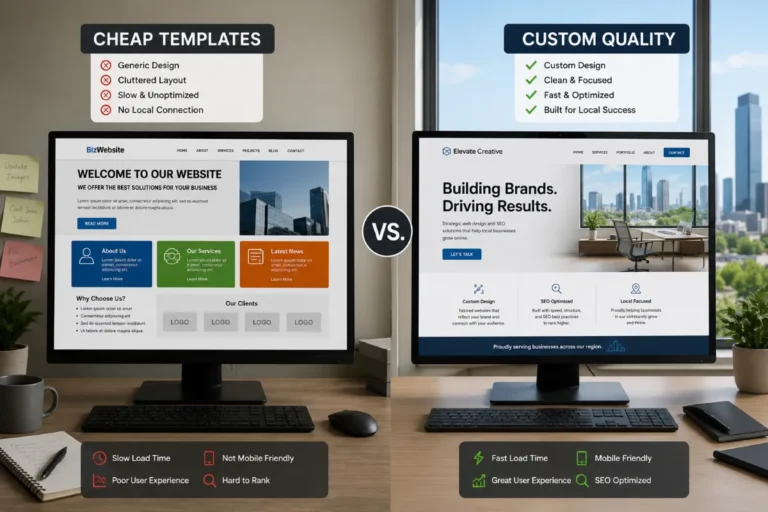
A cheap site often ends up costing more when you have to rebuild it later.
5. What actually makes a website successful?
This is the big one.
A successful website is not just “online.” It works for your business.
That means:
- It loads fast
- It answers real customer questions
- It’s easy to use on mobile
- It clearly tells people what to do next
Even small things matter.
For example, one thing I’ve learned is that even my workspace affects how I build websites. Staying organized helps me stay focused when improving site speed and user experience. And when you’re working on things like page speed and user experience, focus matters. A cluttered desk leads to a cluttered website. Even something as simple as a small desk organizer can make a big difference in how you focus during the day.
At some point, you stop treating your work like a side hustle and start treating it like a business. Upgrading your workspace—even something like a standing desk—can shift your mindset.
The Bottom Line
Building a website is about more than just having an online presence.
It’s about being effective.
If you focus on:
- Strong technical performance
- Clear structure (like the 7 C’s)
- Smart business decisions (like setting up an LLC)
You’ll end up with a website that actually works—not just one that looks good.
If you’re a business owner in the Capital District and you’re not sure if your website is doing its job, it might be time to take a closer look.