
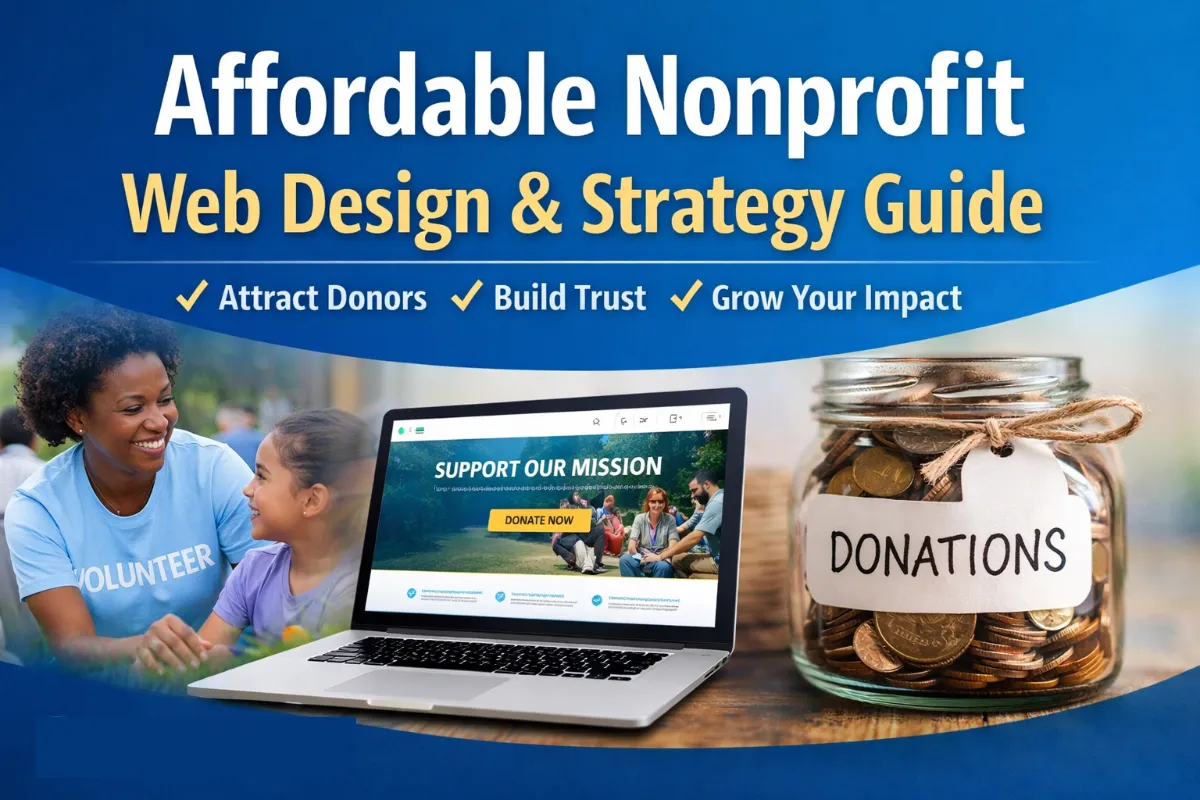
A Practical Guide to Affordable Web Design for Nonprofits
Why Many Nonprofits Struggle With Their Website
If you’re part of a nonprofit organization, you already wear multiple hats. Your focus is on impact, funding, programs, and serving the community — not on managing a website. As a result, many nonprofit websites quietly fall behind. They become outdated, difficult to manage, or unclear in their messaging, even though the organization itself is doing meaningful work.
When I speak with nonprofit leaders, I often hear the same concerns:
“We know we need something better, but we don’t know where to start,” or
“The quotes we’ve received are far beyond our budget.”
That hesitation is understandable. Every dollar must serve the mission, and digital investments need to make sense.
Your Website Should Support Your Mission — Not Drain Your Resources
A nonprofit website does not need to be complex to be effective. It needs to communicate your mission clearly, make it easy for visitors to donate or get involved, and build trust with your community. When those three elements are aligned, your website becomes a working extension of your mission rather than a static online brochure.
Effective structure often matters more than size. A clean, organized site with a clear donation pathway will outperform a complicated build with scattered information. Clarity creates confidence, and confidence encourages action.
What Nonprofits Actually Need (And What They Don’t)
Many organizations assume they need extensive multi-page builds, custom-coded systems, or feature-heavy platforms to appear credible. In reality, most nonprofits benefit more from thoughtful information architecture, mobile-friendly performance, and a clear narrative flow.
A strategic structure — sometimes even a well-designed one-page website — can present mission, programs, leadership, and impact in a cohesive way that feels modern and professional. The goal is not to impress with complexity; it’s to engage with clarity.
Affordable Can Still Be Strategic
There is an important difference between cutting corners and eliminating waste. Affordable web design for nonprofits means aligning scope with actual needs and removing unnecessary layers that drive up cost without adding value.
When we begin with strategy — identifying your primary audience, defining your most important actions, and clarifying your story — the structure becomes focused. That focus protects your budget while strengthening your impact. A streamlined site built intentionally can feel polished, credible, and aligned with governance expectations.
A Structured Process That Respects Your Budget
Every nonprofit project follows a clear and disciplined approach. We begin with discovery and mission alignment, then define scope to ensure the project fits within financial realities. From there, design is centered on trust and accessibility, development prioritizes performance and scalability, and refinement ensures clarity before launch.
This structure removes uncertainty. It allows leadership and board members to feel confident that the investment is thoughtful, measured, and aligned with organizational priorities.
How a Strong Website Supports Funding and Growth
A well-designed nonprofit website can increase donation conversions, improve volunteer engagement, and strengthen credibility with grant providers. When funders evaluate an organization, they often review its website for signs of professionalism, transparency, and impact reporting.
Your website becomes a quiet advocate for your cause. It communicates stability, organization, and intentionality — qualities that matter in funding decisions. It does not need to be massive; it needs to be clear and structured.
If You’re Unsure Where to Begin
Many nonprofit leaders simply need clarity about what is necessary and what is not. You don’t have to decide everything upfront. A focused strategy conversation can help determine whether a streamlined one-page structure makes sense or whether a broader redesign is appropriate.
The goal is not to build the largest website possible. It’s to build the right website for your mission and your budget.
Let’s Build Something That Reflects Your Impact
If your nonprofit has grown but your website hasn’t kept pace, it may be time to refine your digital presence. Not necessarily to make it bigger — but to make it clearer, stronger, and more aligned with your goals.
If you’re evaluating your website ahead of a funding cycle or simply want it to better reflect your mission, let’s start with a conversation. We can clarify scope, discuss practical investment levels, and determine the most strategic path forward.
Your mission deserves a website that supports it with clarity and confidence.